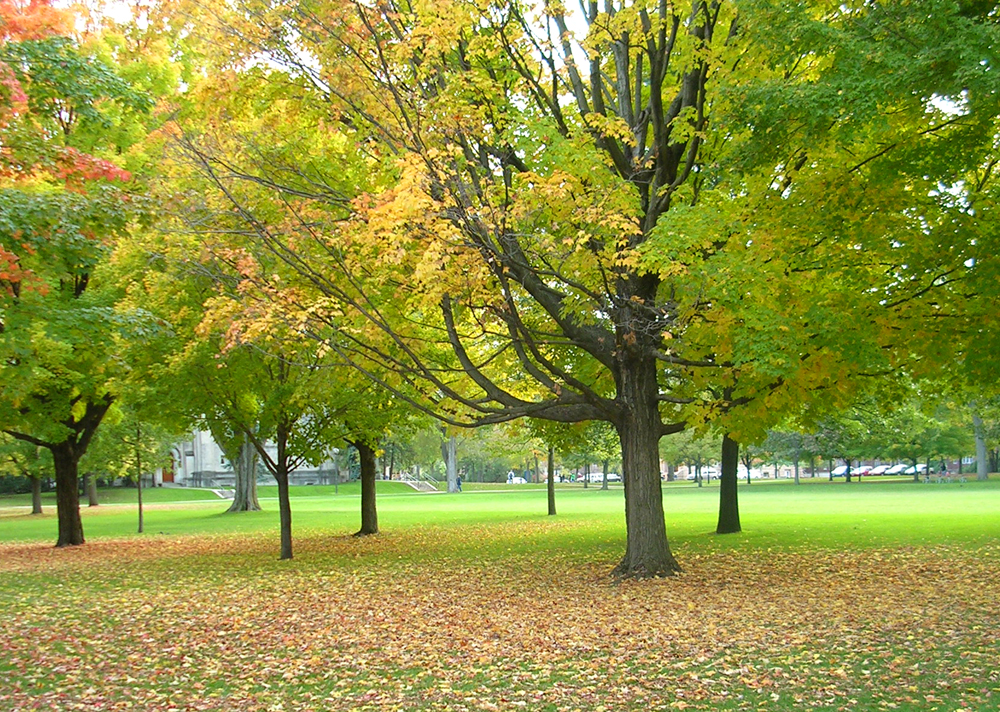
 "Childhood obesity can lead to type 2 diabetes, asthma, hypertension, sleep apnea and emotional distress. Obese children and youth are likely to be obese as adults, experience more cardiovascular disease, high blood pressure and stroke and incur higher healthcare costs. In an article published in the December 2008 issue of the American Journal of Preventive Medicine, researchers report that children living in inner city neighborhoods with higher 'greenness' experienced lower weight gains compared to those in areas with less green space. Researchers from the University of Washington, Indiana University-Purdue University and Indiana University School of Medicine followed more than 3800 children, predominantly African-American and poor, aged 3-16 over a two-year period. Using satellite imaging data to measure vegetation coverage, the investigators found that higher greenness was significantly associated with lower body mass index (BMI) changes in those children. In previous studies of adults, residential density tended to predict physical activity levels, with highly urban environments leading to more walking, less driving and lower BMI. The current study did not find this correlation for children" - EurekAlert
Tuesday, October 28, 2008
Green neighborhoods may reduce childhood obesity
"Childhood obesity can lead to type 2 diabetes, asthma, hypertension, sleep apnea and emotional distress. Obese children and youth are likely to be obese as adults, experience more cardiovascular disease, high blood pressure and stroke and incur higher healthcare costs. In an article published in the December 2008 issue of the American Journal of Preventive Medicine, researchers report that children living in inner city neighborhoods with higher 'greenness' experienced lower weight gains compared to those in areas with less green space. Researchers from the University of Washington, Indiana University-Purdue University and Indiana University School of Medicine followed more than 3800 children, predominantly African-American and poor, aged 3-16 over a two-year period. Using satellite imaging data to measure vegetation coverage, the investigators found that higher greenness was significantly associated with lower body mass index (BMI) changes in those children. In previous studies of adults, residential density tended to predict physical activity levels, with highly urban environments leading to more walking, less driving and lower BMI. The current study did not find this correlation for children" - EurekAlert
No comments:
Post a Comment