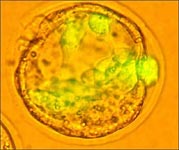
 "For the first time, researchers at the University at Buffalo have shown that it is possible to repair cardiac tissue and, in turn, reverse heart failure by injecting adult bone marrow stem cells into skeletal muscle. The researchers used an animal model to demonstrate that the non-invasive procedure could increase myocytes, or heart cells, by two-fold and reduce cardiac tissue injury by 60 percent. In addition, the therapy improved function of the left ventricle - the primary pumping chamber of the heart - by 40 percent. It even reduced fibrosis - the hardening of the heart lining that impairs its ability to contract-by up to 50 percent....The development has been reported in a paper appearing online in the Articles-in-Press section of the American Journal of Physiology -- Heart Circulation Physiology
Friday, May 29, 2009
Non-invasive stem cell procedure shows promise to repair heart tissue
"For the first time, researchers at the University at Buffalo have shown that it is possible to repair cardiac tissue and, in turn, reverse heart failure by injecting adult bone marrow stem cells into skeletal muscle. The researchers used an animal model to demonstrate that the non-invasive procedure could increase myocytes, or heart cells, by two-fold and reduce cardiac tissue injury by 60 percent. In addition, the therapy improved function of the left ventricle - the primary pumping chamber of the heart - by 40 percent. It even reduced fibrosis - the hardening of the heart lining that impairs its ability to contract-by up to 50 percent....The development has been reported in a paper appearing online in the Articles-in-Press section of the American Journal of Physiology -- Heart Circulation Physiology
No comments:
Post a Comment