Tuesday, March 26, 2013
Updated guide to help policy makers, providers fight cardiovascular disease (USA)


Energy drinks 'could trigger cardiac arrest'
 People with high blood pressure or heart problems should be careful about consuming 'energy drinks' as they could trigger cardiac arrest, doctors warn. The drinks, which often contain large amounts of caffeine and other stimulants like taurine, raise blood pressure and could raise the chance of having an irregular heartbeat, they concluded after looking at results from seven studies. The US doctors said the evidence energy drinks raised blood pressure was "convincing and concerning". Specifically, they found energy drinks raised systolic blood pressure by 3.5 points. It also lengthened a phase of the heart's electrical cycle called the 'QT interval'. Having a long QT interval is a sign a person is at greater risk of suffering from an irregular heartbeat, which can be fatal. They concluded that drinking one to three cans raised the QT interval by 10 milliseconds. Professor Sachin Shah from the University of the Pacific in California, said: "Doctors are generally concerned if patients experience an additional 30 milliseconds in their QT interval from baseline."
Advances transforming cardiac care (USA)
 Have a heart problem? If it's fixable, there's a good chance it can be done without surgery, using tiny tools and devices that are pushed through tubes into blood vessels. Heart care is in the midst of a transformation. Many problems that once required sawing through the breastbone and opening up the chest for open heart surgery now can be treated with a nip, twist or patch through a tube. These minimal procedures used to be done just to unclog arteries and correct less common heart rhythm problems. Now some patients are getting such repairs for valves, irregular heartbeats, holes in the heart and other defects - without major surgery. Doctors even are testing ways to treat high blood pressure with some of these new approaches. All rely on catheters - hollow tubes that let doctors burn away and reshape heart tissue or correct defects through small holes into blood vessels. "This is the replacement for the surgeon's knife. Instead of opening the chest, we're able to put catheters in through the leg, sometimes through the arm," said Dr. Spencer King of St. Joseph's Heart and Vascular Institute in Atlanta
Sunday, March 24, 2013
Is your CARG membership up-to-date?
 In the month of April 2013 CARG will be doing spot-checks to see if your membership is paid to date. Everyone is asked to please to make sure they are carrying their white membership cards with them at all times. Thanks in advance for your co-operation
Thursday, March 21, 2013
Maintenance of equipment at the Field House
 Gary Flegel has requested assistance in helping to maintain the equipment in the exercise room at the Field House. Work will entail cleaning and doing small repairs on the equipment. Please contact a Board Member or Gary if you are interested
Only one in 1,000 'heart healthy'
 The American Heart Association recently issued a list of seven steps to follow to minimise the chances of suffering cardiovascular disease. Its "Life's Simple Seven" are: not smoking, being physically active, not being overweight, maintaining healthy cholesterol levels, keeping blood pressure down, regulating blood sugar levels, and eating healthily. But Professor Jean-Pierre Després, scientific director of the International Chair on Cardiometabolic Risk, said the number who met all seven criteria was vanishingly small. He said: "If you look at those simple seven, and you measure what percentage of different populations around the developed world meet those criteria, it's only 0.1 per cent. "In terms of having an optimal risk of cardiovascular disease, only one in 1,000 people is healthy." He continued: "If you only use the traditional risk factors like cholesterol and blood pressure you would probably end up with 15 per cent." But when one included exercise - or the lack of it - and diet, the number who were really healthy was far smaller. "Exercise and nutrition are the two hardest indicators of cardiovascular health to meet,"he said
Researchers create tomatoes that mimic actions of good cholesterol (USA)
 UCLA researchers have genetically engineered tomatoes to produce a peptide that mimics the actions of good cholesterol when consumed. Published in the April issue of the Journal of Lipid Research their early study found that mice that were fed these tomatoes in freeze-dried, ground form had less inflammation and plaque build-up in their arteries. "This is one of the first examples of a peptide that acts like the main protein in good cholesterol and can be delivered by simply eating the plant," said senior author Dr. Alan M. Fogelman, executive chair of the department of medicine and director of the atherosclerosis research unit at the David Geffen School of Medicine at UCLA. "There was no need to isolate or purify the peptide - it was fully active after the plant was eaten." After the tomatoes were eaten, the peptide surprisingly was found to be active in the small intestine but not in the blood, suggesting that targeting the small intestine may be a new strategy to prevent diet-induced atherosclerosis, the plaque-based disease of the arteries that can lead to heart attacks and strokes
Sugary drinks linked to 180,000 annual deaths worldwide
Sunday, March 17, 2013
Free statins in aisle 6: US supermarket chain giving away atorvastatin
Saturday, March 16, 2013
Popular antibiotic gets cardiac warning
 An antibiotic prescribed for a wide variety of infections may pose heart risks, the US Food and Drug Administration has warned. Azithromycin, sold as Zithromax or the "Z-Pak," may cause abnormal changes in the heart's electrical activity, the FDA said. Those changes may lead to a potentially deadly irregular heart rhythm, the agency added. Patients at risk include those with low blood levels of magnesium or potassium and heart rates that are slower than normal, the FDA said. People who take certain drugs for abnormal heart rhythms are at risk as well. Pfizer, which makes Zithromax, updated the drug's label about the rare heart rhythm abnormality in some patients. "It is important to note that other macrolide antibiotics are similarly labeled," the pharmaceutical company said. "It is also important to note that the majority of patients treated with Zithromax (azithromycin) are not affected by this label update." Zithromax is used to treat infections in the ear, lungs, reproductive organs, sinuses, skin and throat. Zithromax can be taken as a tablet or liquid. It may cause side effects, such as abdominal pain, diarrhea, nausea and vomiting
Tuesday, March 12, 2013
Chippies told to hold the salt in drive to beat heart disease (UK)
 UK Government Ministers want to reduce the amount of salt in popular dishes, such as chips and sandwiches, to help prevent thousands of early deaths each year from heart disease and stroke. Food manufacturers and caterers will be set targets to help cut by a quarter the amount of salt consumed every day. Research suggests that more than half of shoppers "rarely or never" consider the amount of salt in food, despite 86 per cent knowing that too much is unhealthy. The Department of Health is aiming to help consumers reduce their salt intake from an average of 8.1g a day to 6g. Catering and takeaway companies will be set "maximum targets" for the salt content of their most popular dishes. Companies will also be urged to promote low-salt options
Monday, March 11, 2013
Lifesaving heart procedure expanded (Canada)
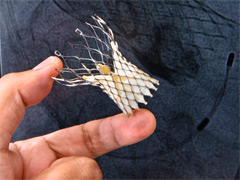 Since its inception in 2009, Sunnybrook's Schulich Heart Centre's TAVI program has provided access to a lifesaving heart procedure for 150 elderly or frail patients not well enough to undergo traditional aortic valve replacement surgery. Now, the centre will not only increase the number of TAVIs performed, but also share its expertise with other Canadian centres to ensure that patients across the country have access to the less invasive procedure. Transcatheter Aortic Valve Implantation, or TAVI, addresses the narrowing of the aortic valve, or "stenosis", a fairly common condition in today's aging population. If left untreated, stenosis can cause the heart muscle to thicken as it works harder to pump blood through the body, potentially leading to heart failure. The procedure takes between two and three hours, about half as long as conventional open-heart surgery for these complex patients, and may be carried out under general or local anaesthesia, with or without sedation. Benefits to patients include reduced pain and less need for postoperative pain medication, smaller scars, a shorter stay in the hospital and a faster recovery. Under the leadership of Dr. Sam Radhakrishnan, Director of the Cardiac Cath Labs and Physician-Lead of Sunnybrook's TAVI program and Dr. Stephen Fremes, surgical lead for the TAVI program, the hospital is guidingtraining for other Canadian hospitals to initiate their own TAVI programs
Atherosclerosis evident in four ancient populations, including hunter-gatherers
 CT scans of mummies from four geographical regions across a period of 4000 years suggest that atherosclerosis was more common in ancient populations than previously believed. Studying individuals from ancient Egypt, ancient Peru, ancestral Puebloans of southwestern America, and hunter-gatherers from the Aleutian Islands, researchers were able to identify atherosclerosis in more than one-third of the mummified specimens, raising the possibility that humans have a natural predisposition to the disease. "Our findings greatly increase the number of ancient people known to have atherosclerosis and show for the first time that the disease was common in several ancient cultures with varying lifestyles, diets, and genetics, across a wide geographical distance and over a very long span of human history," according to the researchers. "These findings suggest that our understanding of the causative factors of atherosclerosis is incomplete and that atherosclerosis could be inherent to the process of human aging." The study is published March 10, 2013 in the Lancet to coincide with a presentation here at the American College of Cardiology 2013 Scientific Sessions
A new drug reduces heart damage
 A single dose of an investigational anti-inflammatory drug called inclacumab considerably reduces damage to heart muscle during angioplasty (the opening of a blocked artery), according to a recent international clinical trial spearheaded by Dr. Jean-Claude Tardif, Director of the Research Centre at the Montreal Heart Institute, affiliated with the University of Montreal. Presented in San Francisco at the prestigious American cardiology conference, these findings show great promise. "Inclacumab could indeed become an integral part of the therapeutic arsenal of modern cardiology if we can reproduce these results in subsequent studies. We could use the drug for a broader patient population, or for all patients who present with a heart attack, but this will require further study," explained Dr. Tardif, lead investigator of the study and also professor of Medicine at Université de Montréal
Sunday, March 10, 2013
Secondhand smoke riskier than cholesterol
 The risk of clogged arteries is greater from secondhand smoke than from several well-known heart disease risk factors, including high cholesterol, researchers found. The overall prevalence of coronary artery plaque in those exposed to secondhand smoke was 24%, which rose to 26% in those with the highest exposure compared with 19% for the general public, Harvey S. Hecht, MD, of Mount Sinai Medical Center in New York City, and colleagues reported online in JACC: Cardiovascular Imaging. Those with the highest amount of exposure to passive smoke were 90% more likely to have coronary plaque compared with the general public. Even after adjusting for other cardiovascular risk factors, the odds associated with developing coronary disease from secondhand smoke were greater than from other well-established danger signs
Stress and artery health studied
 "Stress really does increase the risk of heart attacks and strokes," reported the Daily Mail (UK). It said research has found that people who become stressed are more likely to suffer from hardened arteries. This study measured volunteers' levels of cortisol, a stress hormone, while they carried out tests aimed at raising their stress levels. It found that people who had increased cortisol levels were more likely to have high calcium deposits in the arteries, a marker of coronary heart disease. Although high calcium deposits may indicate heart disease, this study did not directly investigate if stress increases the risk of a heart attack or stroke. A single measure of stress taken at the same time as a measure of calcium build-up in the arteries cannot show whether a person’s lifetime stress habits have caused the build-up. Although further research is needed, minimising stress is known to be associated with improved mental and physical wellbeing. This research was carried out by Dr Mark Hamer and colleagues from University College London and Wellington Hospital. The study was funded by the British Heart Foundation and the Medical Research Council. The paper was published in the peer-reviewed European Heart Journal
Mayo Clinic study finds electric car does not interfere with implanted cardiac devices
 A Mayo Clinic study has concluded that patients with implanted cardiac devices such as pacemakers and defibrillators can safely drive or ride in an electric car without risk of electromagnetic interference. The study, titled "Hybrid Cars and Implantable Cardioverter Defibrillators: Is It Safe?" is the first of its kind to address the interaction between these devices and electric cars. In some cases, implanted devices may sense signals from electrical or magnetic objects and misinterpreted them as potential distress coming from the patient's heart. The increasing prevalence of electric and hybrid cars, one of the fastest growing segments of the American automotive industry, prompted Mayo Clinic cardiac investigators to study the potential risk of the effects of EMI on patients with implantable devices. Mayo Clinic researchers used implantable devices from the three major manufacturers and a 2012 Toyota Prius hybrid in the study. Electric and magnetic fields were measured in six positions: from the driver's seat, front passenger seat, the left and right rear seats and in front of and behind the car from the outside
Wednesday, March 6, 2013
LDL Apheresis Program (USA)
 Loyola University Medical Center is offering LDL apheresis, a treatment that cleanses the patient's blood of LDL (bad) cholesterol. Loyola is among a handful of centers in the Midwest - and the only academic medical center in Chicago - to offer LDL apheresis. Once every two weeks, a patient spends two to four hours connected to an apheresis unit that processes the blood. The machine separates the blood and plasma, then removes about 70 to 80 percent of the patient's LDL (low density lipoprotein) cholesterol. The cleaned blood is returned to the body. The good HDL cholesterol is not removed. Loyola's multidisciplinary LDL Apheresis Program is intended for patients who have been unable to control cholesterol with lifestyle changes and medications. They include patients with coronary heart disease who have LDL cholesterol greater than 200 mg/dL, and patients without coronary artery disease who have LDL levels greater than 300 mg/dL. Research shows that LDL apheresis improves vascular function and can help patients avoid a heart attack or stroke
Volunteering can help stave off heart disease
Elsevier and the ACC announce the launch of a new journal JACC: Heart Failure
 Elsevier, a world-leading provider of scientific, technical and medical information products and services, and the American College of Cardiology (ACC) have announced that the American College of Cardiology (ACC) journals' portfolio has been expanded with the launch of JACC: Heart Failure. This new journal will better meet the demands and challenges of treating what is now the most rapidly increasing category of cardiac disease
Monday, March 4, 2013
Number of people diagnosed with diabetes reaches three million (UK)
 The number of people in the UK who have been diagnosed with diabetes has reached three million for the first time, equivalent to 4.6 per cent of the UK's population, according to new analysis carried out by Diabetes UK and Tesco. The figure represents an increase of 132,000 people diagnosed with diabetes over the last year. A further 850,000 people are thought to have undiagnosed Type 2 diabetes. Experts have warned that unless more is done to prevent Type 2 diabetes and more help is given to help those with the condition, the increase could see the NHS burdened with unsustainable costs, which has huge implications for public health. Every year in England and Wales, 24,000 people with diabetes die earlier than expected, a situation that is expected to get even worse without urgent action
Subscribe to:
Comments (Atom)