 A new implantable defibrillator accurately detects abnormal heart rhythms and shocks the heart back into normal rhythm, yet has no wires touching the heart, new research shows. The device, called a subcutaneous implantable cardiac defibrillator (S-ICD), is placed under the patient's skin and has a wire under the skin along the left side of the breast bone. "The device detects life-threatening arrhythmias from normal rhythms, and once it notices the life-threatening rhythm it will automatically shock the heart back to its normal rhythm," said lead researcher Dr. Martin Burke, director of the Heart Rhythm Center at the University of Chicago. The advantage of the device is its durability - it lasts longer because there is not as much flexibility in the wiring, Burke said. Wires in standard implantable defibrillators need to be flexible to pass through blood vessels to the heart. "This makes the system enticing for younger patients who have risk of cardiac arrest who currently don't get standard systems because of [probable] failures of those systems over time," Burke said. "The heart beats 30 million times a year, and those beats put wear and tear on those wires." The research was paid for by the device's maker, Cameron Health Inc., and then by Boston Scientific Corp. after it acquired Cameron. The report was published online August 27 in the journal Circulation
Friday, August 30, 2013
New defibrillator works without wires touching heart
A new implantable defibrillator accurately detects abnormal heart rhythms and shocks the heart back into normal rhythm, yet has no wires touching the heart, new research shows. The device, called a subcutaneous implantable cardiac defibrillator (S-ICD), is placed under the patient's skin and has a wire under the skin along the left side of the breast bone. "The device detects life-threatening arrhythmias from normal rhythms, and once it notices the life-threatening rhythm it will automatically shock the heart back to its normal rhythm," said lead researcher Dr. Martin Burke, director of the Heart Rhythm Center at the University of Chicago. The advantage of the device is its durability - it lasts longer because there is not as much flexibility in the wiring, Burke said. Wires in standard implantable defibrillators need to be flexible to pass through blood vessels to the heart. "This makes the system enticing for younger patients who have risk of cardiac arrest who currently don't get standard systems because of [probable] failures of those systems over time," Burke said. "The heart beats 30 million times a year, and those beats put wear and tear on those wires." The research was paid for by the device's maker, Cameron Health Inc., and then by Boston Scientific Corp. after it acquired Cameron. The report was published online August 27 in the journal Circulation

Friday, August 23, 2013
Thursday, August 22, 2013
Cuba's cardiac rehabilitation program deemed a success
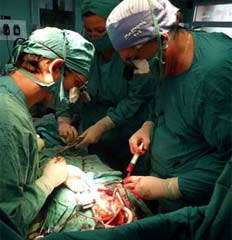 Cuba's community-oriented cardiac rehabilitation program, aimed at the prevention, diagnosis, treatment and recovery of patients, including children suffering from congenital cardiopathies, was labeled as successful by an expert in Havana. Doctor in Medical Science Eduardo Rivas Estany, who heads the Cuban Cardiology Society, said that cardiology services are available in all Cuban provinces, with modern technology and specialized medical treatment, which is considered as advanced as those being offered in developed nations. This reality allowed taking the deaths from heart conditions to a second place after cancer by the end of 2012. Heart diseases prevailed the first cause of death over the past fifty years. Also, Cuba's pediatric cardiology network has helped lower infant mortality, whose rate in 2012 was reported at 4.6 in every one thousand inhabitants, the lowest indicator in the Americas, the doctor said
Wednesday, August 21, 2013
Thanks to volunteers
Monday, August 19, 2013
IEEE Honors CARG member Mohindar Sachdev
 Mohindar Sachdev, Past President of CARG is delighted to share with CARG members gratifying news that he received the 2013 Charles Proteus Steinmetz Award on July 23, 2013 at the Annual General Meeting of the Power and Energy Society (PES) of the Institute of Electrical and Electronics Engineers (IEEE). On July 16, 2013 prior to the meeting, IEEE issued the following press release.
MOHINDAR S. SACHDEV, DRIVER OF STANDARDS FOR POWER SYSTEMS, TO RECEIVE 2013 IEEE CHARLES PROTEUS STEINMETZ AWARD
Efforts Have Helped Set the Standard for More Reliable and Secure Electric Power Systems
NEW YORK, N.Y. (16 July 2013) - Mohindar S. Sachdev, a power engineer whose passion for standards development made him a driving force in creating and revising guidelines for safer and reliable electric power systems, is being honored by IEEE with the 2013 IEEE Charles Proteus Steinmetz Award. IEEE is the world's largest technical professional association.
The award, sponsored by the IEEE Standards Association, recognizes Sachdev for contributions to and leadership in the development of guides, recommended practices and standards for power system protection. The award will be presented on 23 July 2013 at the IEEE Power and Energy Society General Meeting in Vancouver, B.C., Canada.
Through hands-on writing and key leadership, Sachdev became a cornerstone of the IEEE Power System Relay Committee's success in publishing important standards and guidelines impacting power system protection. As technology evolved, Sachdev played an important role in revising standards originally written for electromechanical and analog devices to reflect the role of digital technology in the automation, control and protection that has led to today's smart grids. His work focused on areas ranging from differential and polarized circuit testing to grounding of secondary circuits and protection of power transformers to protective relay applications for transmission lines.
Sachdev, a power engineer with more than 60 years of experience, is being recognized for the contributions to and leadership in the development of guides, recommended practices and standards for power system protection. Sachdev has published over 300 papers on power system analysis, control and protection.
An IEEE Life Fellow, Sachdev is Professor Emeritus with the Department of Electrical and Computer Engineering at the University of Saskatchewan, Saskatoon, Canada.
Sunday, August 18, 2013
Walking to work tied to lower diabetes risk (UK)
Restricting blood flow may help heart bypass patients (UK)
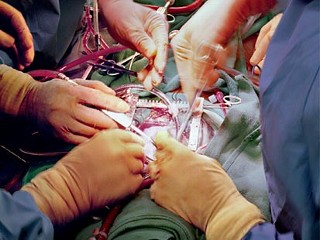 In a potentially significant discovery for heart bypass patients, British researchers are reporting that limiting blood flow to an arm before surgery produced better results in a small trial of patients. Restricting blood flow before surgery reduced levels of troponin T, a cardiac protein that is released into the bloodstream after injury to the heart and is associated with poor outcomes after surgery, the researchers said. "If you remotely precondition the heart before surgery, you get significant protection," said study researcher Dr. Derek Yellon, of University College London's Hatter Cardiovascular Institute. "You can significantly reduce troponin T in patients undergoing bypass surgery." "Remote preconditioning is a phenomena in which, if one deprives the blood supply to an organ or tissue, other than the heart, that initiates a protective mechanism on the heart," added study lead author Dr. Derek J. Hausenloy, also from the Hatter Cardiovascular Institute. The findings are published in the August 18 issue of The Lancet
Saturday, August 17, 2013
MS drug shows promise for preventing heart failure
Cheap blood test could lead to high blood pressure cure (UK)
 A study undertaken by Cambridge University found that at least 10 per cent of the 16 million people who suffer with high blood pressure could be cured if diagnosed early. It focused on a specific form of the condition caused by tiny, benign tumours of the adrenal gland, a hormone-producing gland that sits on top of the kidney. If detected with a £15 test, scientists believe it could be treated through keyhole surgery. The British Heart Foundation described the research as "an exciting development" but said it would be dependent upon early diagnosis. The operation is most successful for those under the age of 40. However, the belief that the tumours are extremely rare means that the procedure is only carried out around 300 times a year. Professor Morris Brown, a member of the research team and an honorary consultant physician at Addenbrooke's Hospital in Cambridge, said the number who could benefit could be around 30 times higher and called for men and women in their 20s and 30s with high blood pressure to be given the blood test
Stroke victim unable to feel sadness (UK)
 Malcolm Myatt, 68, who spent 19 weeks in hospital and lost the feeling in his left side, was told by doctors that the stroke had hit the frontal lobe of his brain, which controls the emotions. He has since noticed a number of changes, including to his short term memory, but believes that the loss of sadness from his emotional repertoire is a positive. Experts have confirmed that it is not uncommon for strokes to cause psychological, emotional and behavioural changes. The retired lorry driver said: "I am never depressed. Being sad wouldn't help anything anyway. I would definitely rather be happy all the time than the other way round. It's an advantage really. "The stroke could have become my worst enemy but I wouldn't let it. Now I barely even notice that I don't feel sadness.”
 Friday, August 16, 2013
Young binge drinkers may be on the road to heart disease
Don't fear defibrillators, says mother who lost son (Canada)
 Automated external defibrillators that give instructions on how to use them have been installed at Edmonton International Airport and an Alberta mother wants to make sure people aren't afraid to use them. Kim Ruether's 16-year-old son Brock died from cardiac arrest last year even though there was defibrillator at his volleyball practice. It turned out that people were afraid to use the device. Since then, Ruether and her husband have been educating people on how to use AEDs which use an automated voice to talk users through each step. "Maybe someday a parent will come say thank you for raising this awareness and saving our boy or girl," Ruether said.
 Ruether told her story at Edmonton International Airport where 60 automatic external defibrillators (AEDs) have been installed throughout the terminals
Cardiac health scanner worker detects her own heart tumour (UK)
 A hospital worker who scans hearts discovered her own heart tumour during a routine training exercise. Amy Sherwood, 33, an echocardiographer at Wrexham Maelor Hospital, was acting as a Guinea pig with a colleague when she spotted the growth. Ms Sherwood became one of just a few patients in the UK to receive keyhole heart surgery to remove the tumour, which meant a shorter recovery period. Two weeks after the operation, she married her fiance Simon Bowden. Ms Sherwood was stunned to discover the tumour. "Although I've been carrying out echocardiograms on patients for a number of years, never in my working life did I imagine that I would find a problem with my own heart - especially so close to my wedding day," she said
Heart's own stem cells could help treat cardiac failure
Thursday, August 15, 2013
Lab-grown human heart tissue beats on its own
 Progress in regenerative medicine has been coming fast and furious in recent months: scientists are now using far-out tissue engineering techniques to restore liver function in mice, regrow human muscle, and even implant bioengineered blood vessels into ailing patients. Now, a team at the University of Pittsburgh has managed to grow human heart tissue that can beat autonomously in a petri dish - an exciting step towards devising transplantable replacement organs. The group, who reported their progress in the journal Nature Communications, used induced pluripotent stem cells (iPS cells) to accomplish the feat. These mature human cells are first "reprogrammed" to an embryonic state, before being spurred to develop into a specialized type of cell. In this instance, iPS cells derived from human skin were induced to become multipotential cardiovascular progenitor (MCP) cells - basically heart cells that can further differentiate into three varieties of highly specialized cells required for cardiovascular function
Sunday, August 11, 2013
Implantable defibrillators linked to decline in cardiac arrests (Netherlands)
 Implantable cardioverter defibrillators - small devices placed in the chest to detect potentially fatal heart rhythms - reduce the number of cardiac arrests caused by ventricular fibrillation, a type of abnormal heart rhythm, according to a new study. Researchers in the Netherlands estimate that the cardioverter defibrillators prevented 81 cardiac arrests related to ventricular fibrillation between 2005 and 2008 in greater Amsterdam. They further estimate that the devices accounted for one-third of the decline seen in cardiac arrests caused by ventricular fibrillation between 1995 and 2008. The study was published August 6 in Circulation
Study: The road to health starts by walking, biking to work
 People who walk or bike to work are less likely to have diabetes, high blood pressure or a heart attack than those who drive to work, British researchers say. Anthony Laverty of the School of Public Health at Imperial College London and colleagues at the University College London examined how people got to work, using data from a survey of 20,000 people across Britain and compared it with health data. The study, published in the American Journal of Preventive Medicine, found people who walked to work were 17 percent less likely than people who drove to have high blood pressure, cyclists were around half as likely to have diabetes as drivers and 40 percent who walked were less likely to have diabetes as drivers. The study also found that those who cycled, walked or used public transport were all associated with lower risk of being overweight than those who drove or took a taxi. The researchers said people could reduce their risk of serious health problems such as heart attacks by avoiding using a car. "This study highlights that building physical activity into the daily routine by walking, cycling or using public transport to get to work is good for personal health," Laverty said in a statement
Kids’ cardiac threat (Spain)
 Children who exercise for less than an hour a day could be at risk from heart disease in the future, according to Spanish research. One in seven of the 3,120 children who took part in the Europe-wide study were found to have higher than average blood pressure and cholesterol levels. The youngsters, aged between two and nine-years-old, were also found to have poor fitness levels and layers of fat, putting them at greater risk of health problems in later life, according to scientists at the University of Zaragoza. Meanwhile, a separate study by researchers at Newcastle University has revealed that girls exercise for an average of just 17 minutes a day, while boys were active for 24 minutes
Saturday, August 10, 2013
How the 'obesity gene' triggers weight gain (UK)
Subscribe to:
Comments (Atom)